

Class RA1 Reflective is one of the most widely used films on temporary road signs and traffic management signage in the UK. Designed to provide reliable visibility in low-light conditions, RA1 reflective helps ensure road users can clearly see temporary warnings, diversions and roadwork instructions.
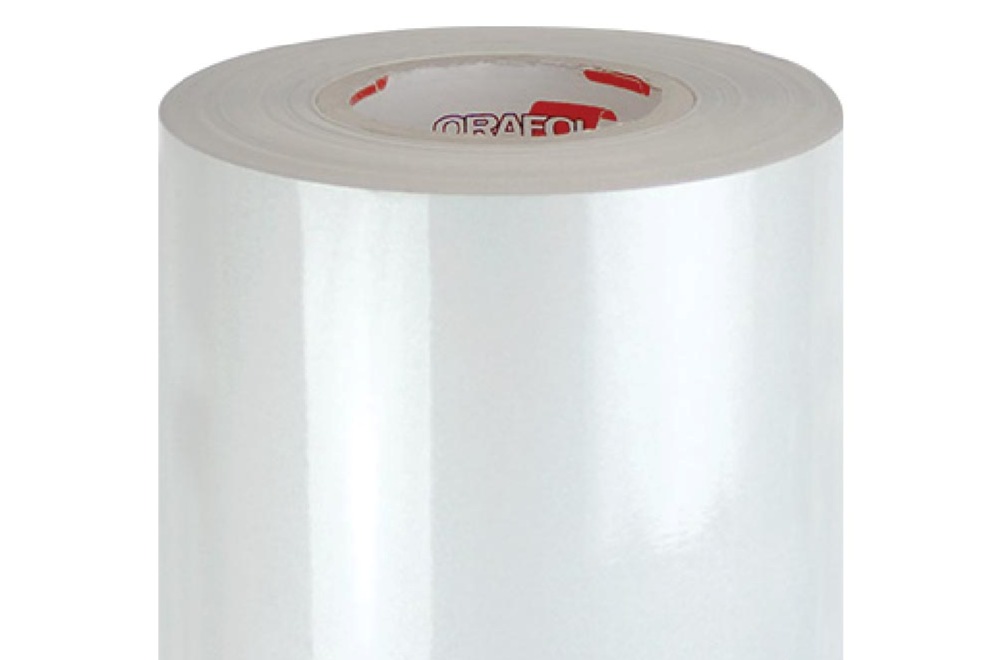
In this guide, we explain what Class RA1 Reflective sheeting is, its applications, how it compares to RA2, what standards apply to compliant temporary road signs and introduce an ORALITE® reflective.
What Is Class RA1 Reflective Sheeting?
Class RA1 Reflective sheeting is a retroreflective material designed to improve sign visibility when illuminated by light. RA1 films typically use glass-bead technology, where microscopic spheres embedded within the sheeting reflect light towards its source.
Key characteristics of RA1 Reflective:
- Glass-bead reflective construction
- Excellent visibility angles for low-speed roads
- Cost-effective retroreflectivity at required distances
For signs on roads with shorter viewing distances, Class RA1 is specified because it balances performance, cost & compliance.
Where Is RA1 Reflective Used?

RA1 Reflective is primarily used for temporary and short-term traffic management signs, especially in areas with lower speed limits.
Sign applications include:
- Urban road & utility works
- Pedestrian diversion signs
- Advance warning signs & events
- Construction site guidance signage
Signs with RA1 faces are deployed on worksites located on urban, unlit & minor roads, which have lower reflectivity requirements.
RA1 vs RA2 Reflective: What’s the Difference?
When selecting reflective films, it’s important to understand the difference between RA1 and RA2 classes. Class RA2 reflects significantly more light than RA1 and performs better at longer distances & high-speed. Whereas RA1 reflective offers wider reading angles that make it perfect for slower urban & rural roads.
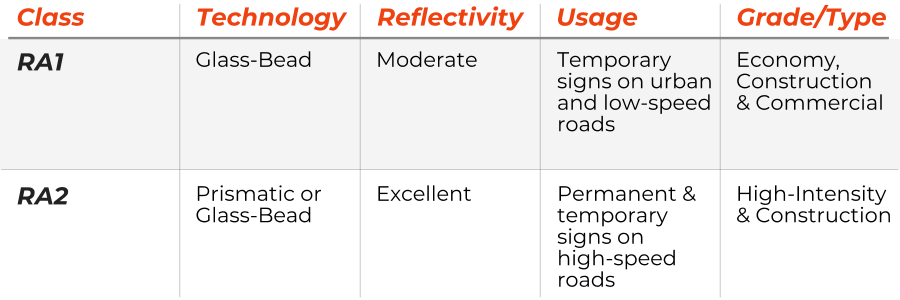
Due to performance, Class RA1 is the most practical reflective for temporary low-speed road signs, while high-speed roads require RA2 films.
Compliance Standards for Temporary Signs

Temporary road sign reflective must comply with BS 8442:2015 & the Traffic Signs Regulations and General Directions (TSRGD).
Core Temporary Sign Requirements:
- Signs must meet TSRGD standards
- Sign face must be reflectorised (ex. black)
- Class RA1 is specified for low-speed, low-risk roads
- Class RA2 is specified for high-speed, high-traffic roads
- Signs must be placed at an appropriate distance for readability
- Portable, free-standing signs must be stabilised against the wind
- Temporary signs must be kept clean, legible and in good condition
When sourcing temporary road signs, always consult the local authority to ensure scheme specifications comply with local requirements.
Choosing Class RA1 Reflective For Temporary Road Signs
As the UK Master Distributor for ORALITE® Reflective, we supply materials trusted by sign manufacturers, local authorities & traffic management professionals. Choosing ORALITE® helps ensure your temporary road signs remain visible, compliant & durable.
When producing or sourcing temporary road signs, you want a dependable and compliant RA1 reflective. ORALITE 5200 is designed specifically for traffic sign production and offers:
- Class RA1 reflectivity compliance
- Glass-bead reflective technology
- Consistent visibility & readability
- 3 Year durability or exterior lifecycle
When manufacturing temporary road signs or ordering traffic management signs, the right reflective material is essential to ensure visibility and compliance.
Looking for RA1 Reflective Sheeting?
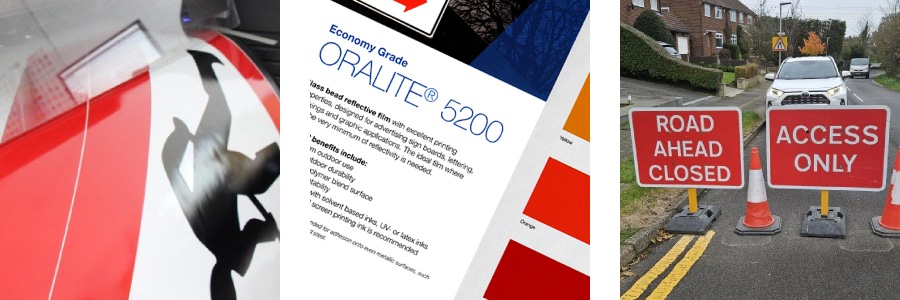
We recommend ORALITE® 5200 Reflective because it provides a trusted RA1 solution with film versions that support plastic surfaces.
👉 Contact us for more information on our catalogue of reflective films, traffic printers or trading terms for temporary road signs.
Frequently Asked Questions
Q: What is class RA1 reflective used for?
A: Class RA1 reflective is a retroreflective sheeting used primarily on temporary signs for works in low-traffic locations, rural and unlit roads, where high-reflectivity is not critical.
Q: What’s the difference between RA1 & RA2?
A: The main difference between the classes is their level of retroreflectivity and intended use. Class RA2 offers significantly higher brightness and visibility compared to RA1 films.
Q: Do temporary traffic signs need to be reflective?
A: Yes, temporary traffic signs must be reflective to meet UK safety regulations. TSRGD guidelines say signs must be fit-for-purpose and require RA1 grade reflective materials for urban and rural roads, with higher-grade RA2 or R3B materials used for high-speed highways.