

There’s an uncomfortable truth emerging in the traffic management industry: non-compliant temporary traffic signs are no longer an exception – it’s becoming the norm. Recent industry attention, including a statement from ARTSM has brought the issue back into focus, but for many working within the sector, this won’t come as a surprise.
The real question is: how has this been allowed to happen?
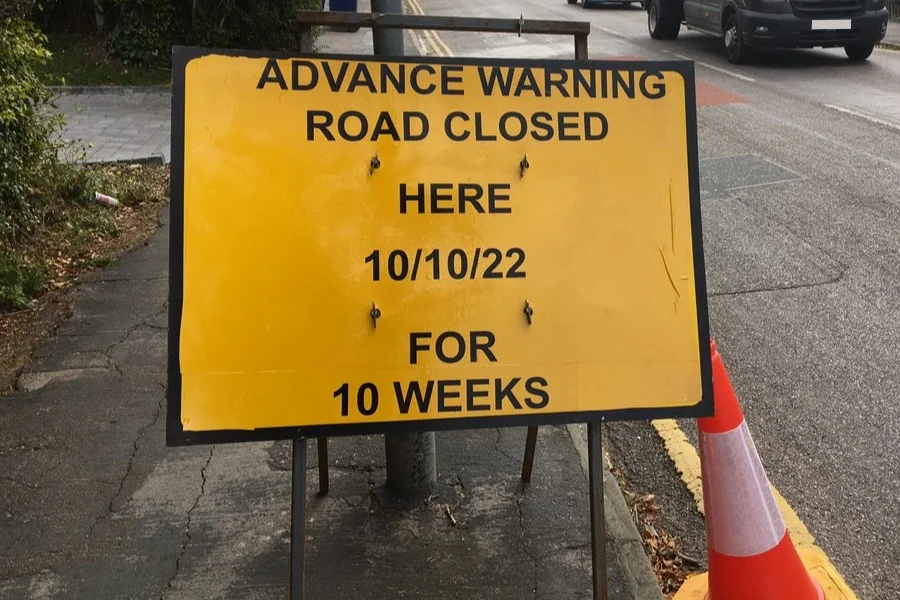
What are non-compliant temporary traffic signs?
Non-compliant temporary traffic signs are those that do not conform to the requirements outlined in the Traffic Signs Regulations and General Directions (TSRGD). Issues include incorrect layouts, improper x-Heights, unauthorised symbols & elements, or insufficient reflectivity, which can reduce visibility, cause driver confusion & increase risks
Why Aren’t the Regulations Being Met?
The UK traffic management industry doesn’t lack guidance. Between TSRGD and Chapter 8, the rules around temporary signage are clear, detailed, and well-established. This isn’t a grey area.
So, when we see:
- Invalid font types for traffic signs
- Incorrect x-Height for font size
- Non-prescribed layouts, elements or symbols
- Inadequate reflectivity performance
- Poor text spacing or alignment
- Too many information units
- Failure to follow the TSRGD regulations
…it’s not because the standards don’t exist. It’s because, somewhere along the line, they’re being ignored, misunderstood, or deprioritised.
Compliance Isn’t Just Best Practice it’s Critical
As scrutiny increases, ensuring signs meets TSRGD requirements is no longer just best practice – it’s essential for safety, consistency, and legal compliance.
Let’s be clear: Temporary TM Signage is not a box-ticking exercise. It directly affects:
- How quickly a driver can read and react
- Whether instructions are understood at speed
- The safety of operatives working roadside
🚨 Poor signage doesn’t just look unprofessional, it creates risk. Yet, too often, compliance is treated as optional to cost.
ARTSM’s Position on Non-Compliant Temporary Traffic Signs
ARTSM’s statement addressed Industry concerns regarding the number of signs not meeting regulatory standards, including signs supplied with incorrect fonts & x-Heights or non-traffic grade reflectivity. These failures raise serious questions for local authorities on road safety, consistency, and legal responsibility.

ARTSM indicated it has been made aware of instances where local authorities and contractors have procured TM Signs that was not compliant with TSRGD regulations or BS 8442:2024 standards. Worryingly this included temporary signs made with non-traffic grade reflectivity, with serious consequences for site safety.
The ARTSM message is clear:
👉 Regulatory compliance is not optional; it is fundamental to safety and professionalism.
The Risks of Non-Compliant Signage
Temporary signs play a vital role in protecting both road users & operatives. Traffic signs that fail to meet standards can result in:
- Reduced sign legibility at speed and distances
- Increased driver confusion at unclear messaging
- Potential legal and contractual liability for contractors
Compliance failure doesn’t just reduce clarity; it invalidates signs & increases risk. The industry needs to move away from the mindset of “It’s only up for a few days – it’ll do.”
Why Non-Compliance Happens
While using non-compliant temporary traffic signs may not be intentional, common causes include:
- Manual sign design processes & applications
- Lack of access to fully compliant templates
- Misunderstanding of the x-Height rules
- No training on common sign element formats
- Using non-compliant materials to cut costs
- Lead time pressures leading to production shortcuts
🔔 Businesses & contractors that prioritise compliance will find themselves best placed to deliver safe, more reliable traffic management.
Raising Standards Means Raising Expectations
ARTSM’s statement is a timely reminder, but the responsibility doesn’t sit with one organisation.
Leaving aside enforcement, improving sign standards requires a collective effort. Designers must prioritise accuracy, suppliers should focus on compliance & contractors need to demand consistency.
Note: ARTSM will soon publish further guidance on temporary sign requirements.
How to Ensure Temporary Sign Compliance
The industry needs to change its approach to compliance and prioritise the safety achieved rather than just its cost.
At Tennants UK, compliance is at the heart of our processes. When producing temporary traffic signs, our printers, inks & films are all standards compliant. Importantly, all our graded reflective films are certified to meet national standards.
🏛️ Under the Traffic Signs Regulations and General Directions (TSRGD) and supporting guidance, such as Chapter 8, temporary signs must:
- Follow prescribed designs, symbols & layouts
- Use the correct fonts, x-Heights and formats
- Display text compliant with DfT working drawings
- Meet specified reflectivity & digital print standards
- Be correctly positioned and maintained on-site
Sign design software must use prescribed fonts & templates based on regulations, implementing consistent legal x-Heights, spacing & formats.
Traffic Sign Printers
A compliant workflow for producing temporary traffic signs is possible with digital traffic sign printers. Systems like our ORALITE® Traffic Printers are optimised for reflective sheeting and offer full compatibility with specifically certified reflective films, specialist inks and laminates.
- Entry & Professional level printing systems
- UV & ECO inks for fast drying or low emissions
- Sheet, roll-to-roll or direct to substrate operation
- Efficient workflow that minimises energy use & waste
- Colours & reflective profiles that ensure compliant prints

Certified & Compatible Reflective
Tennants UK supplies ORALITE® reflective sheeting, trusted across the industry for its high-performance & fully compatible solutions. The range includes micro-prismatic & glass-bead solutions for Class RA2 & RA1, covering high-speed and urban applications.
- Choice of RA2 or RA1 reflective films
- Performance durability spanning 3-5 years
- Options on prismatic or glass-bead films
- High-Tack versions for plastic substrates

Compliant Design Software
Switching to specialised software can help ensure every temporary sign design is consistent, legible and regulatory compliant by default. For example, Baseline software for Advance Warning Signs applies legal x-Heights, transport fonts & formats by design.
- Applies x-Height based on road speed
- Includes Transport Heavy & Medium fonts
- Using compliant sign layouts and formats
- Guiding users through a structured design process
- Providing compliance guides & videos for each design step

Conclusion: Raising Standards
The traffic management industry should take the ARTSM statement seriously. A greater understanding of the regulations, the use of compliant design tools & a dedication to only using certified reflective are all necessary for improving temporary sign standards. Our highways are no place for non-compliant temporary traffic signs.
You control whether your TM signs are compliant and what ends up on the road. After all, this is about protecting lives.
👇 Want to ensure your temporary signage is compliant?
Get in touch with Tennants UK to learn more about ORALITE® Reflective & Traffic Printers, Baseline Software or our compliant temporary traffic signs.