
This quick guide on Enviro-Plate Assembly shows how to combine printed film and a reflective backing plate using a roller jig
You produce an Enviro-Plate by laminating a reverse-printed film sheet above a reflective backing plate. This specific combination of plate media is covered by our 2024 BS AU145e Certification, so we guarantee number plates made from them will be road legal, subject to correct usage.
Video Guide: Enviro-Plate Assembly
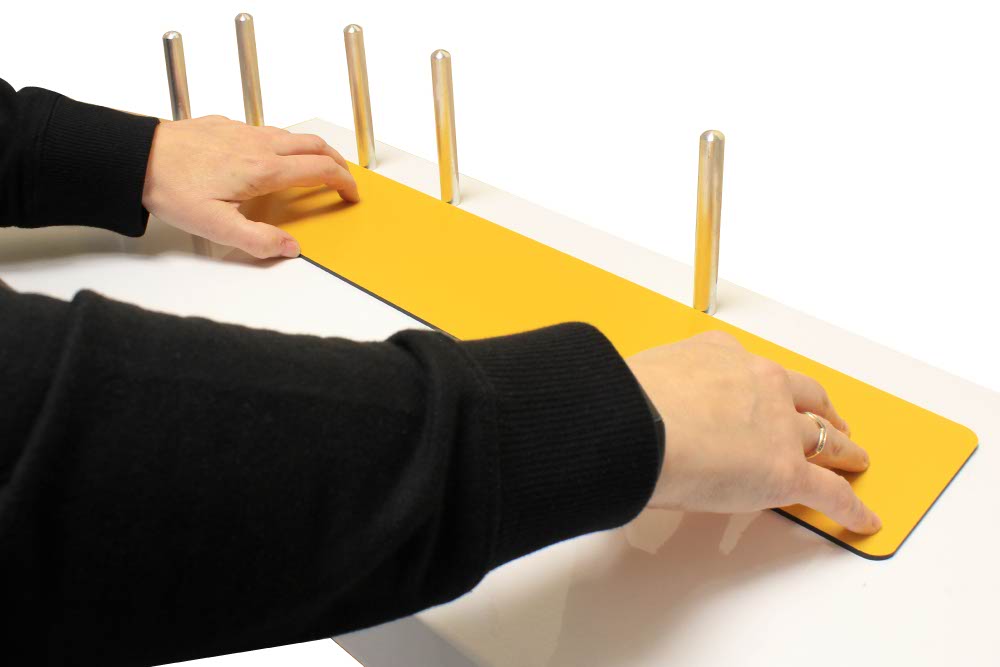
Please do your plate assembly in a well lit, clean and warm work area. Dust, fumes, damp and high-humidity can all contaminate your components and effect prints or the adhesive bonding.
Start your Enviro-Plate assembly by placing a reflective backing plate onto the jig bed with the reflective facing upwards. Slide it up against the pins on the top left hand side, this will ensure it’s flat and straight.
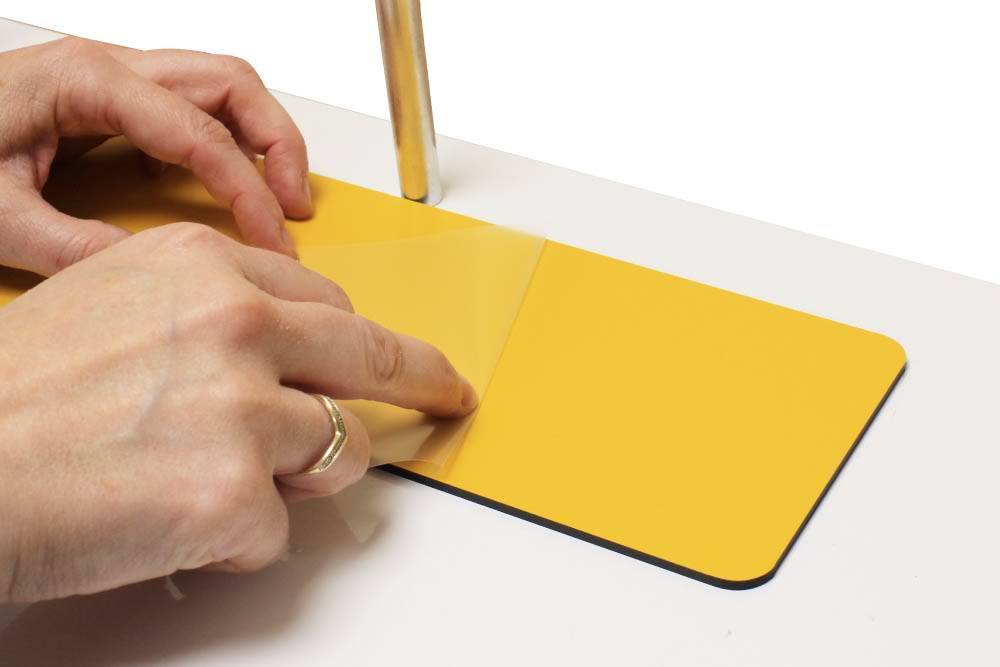
Now you need to get the backing plate ready for the printed film that’s going on top. So, fold back some of the adhesive cover on its right hand side. To stop it flopping back onto the glue, put a crease in the adhesive cover
It’s important you only expose a bit of the adhesive. Film sheets weigh less than reflective panels, so it unsuitable for drop assmbly and needs laminating a bit at a time. Fold the cover at an angle so it’s easy to grab hold of later.
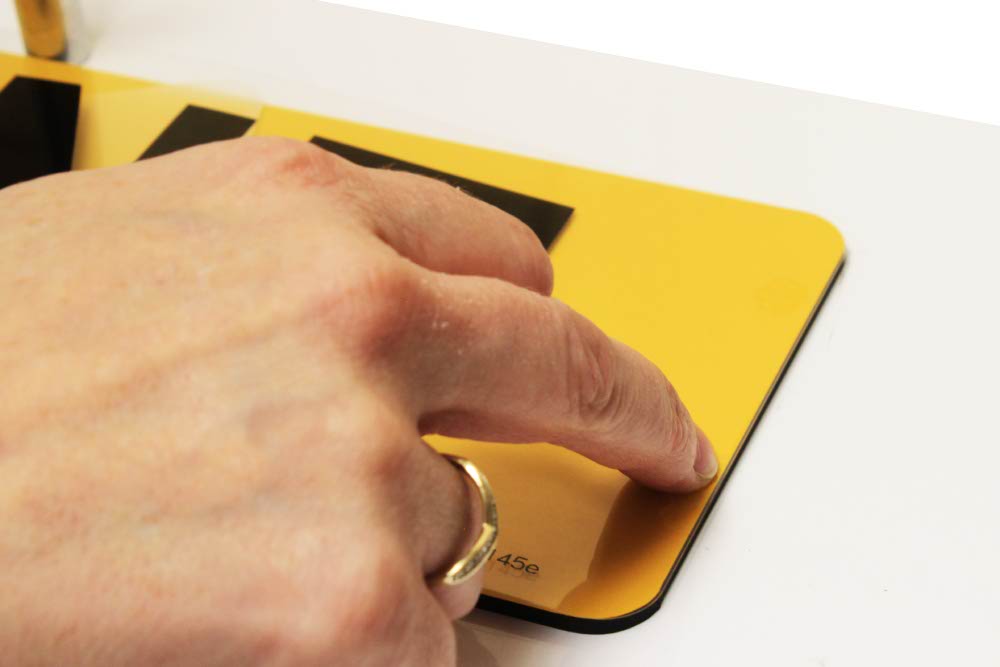
Next you will be joining your printing film sheet on top of the backing plate. Remenber the film is reverse printed for durability, so make sure you have the printed side facing down towards the backing plate.
Hold the film above the backing plate, use the pins so it lines up perfectly. Lower it gently so it’s laying on top of the plate, then carefully join them together by running your finger lightly down the right hand edge.
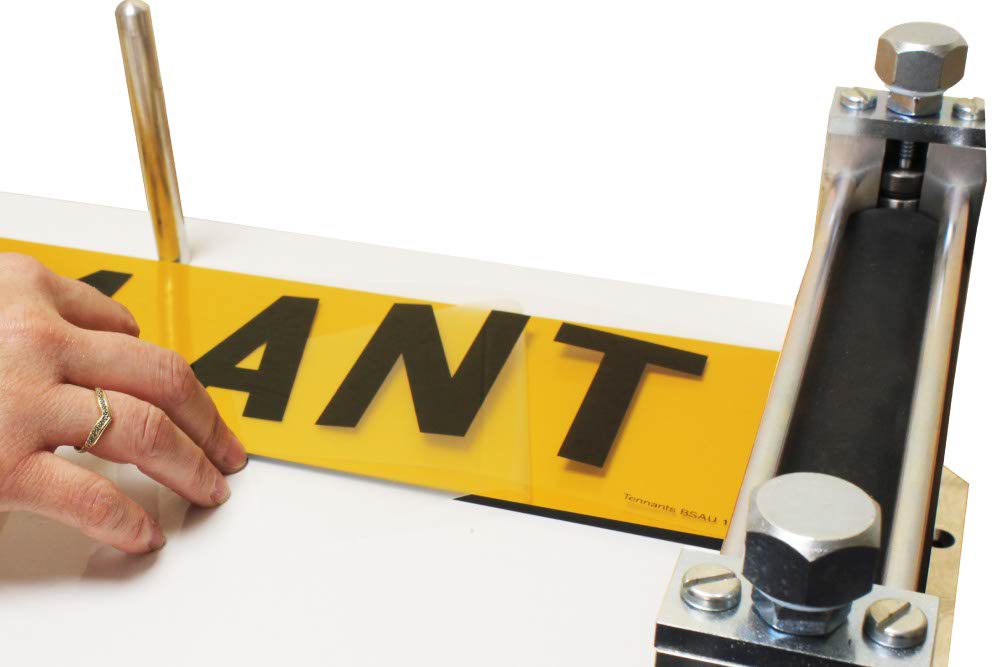
Once the components are joined, it’s time to laminate them using the jigs rubber rollers. The plates self-adhesive is pressure activated, so you want to apply an equal pressure across its surface using the rollers.
Carefully slide your components towards the rollers, with the joined edge nearest. Loosely hold the clear film, to stop it moving about. Stop sliding when your components touch the rubber rollers.
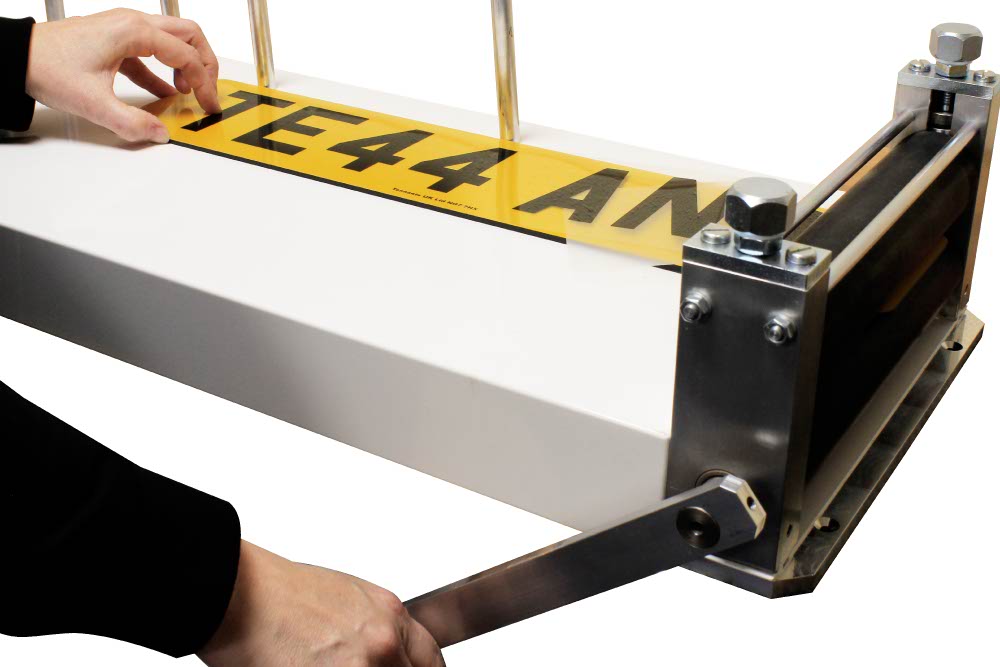
Before we feed the components through the rollers, we need to stop the film from moving around. So, lightly place your left-hand on top of the media to keep the film still and slowly wind the roller arm with your right hand. You only want to feed it a couple of centermetres into the rollers. By keeping the film still, you will reduce the chance of any bubbles forming.
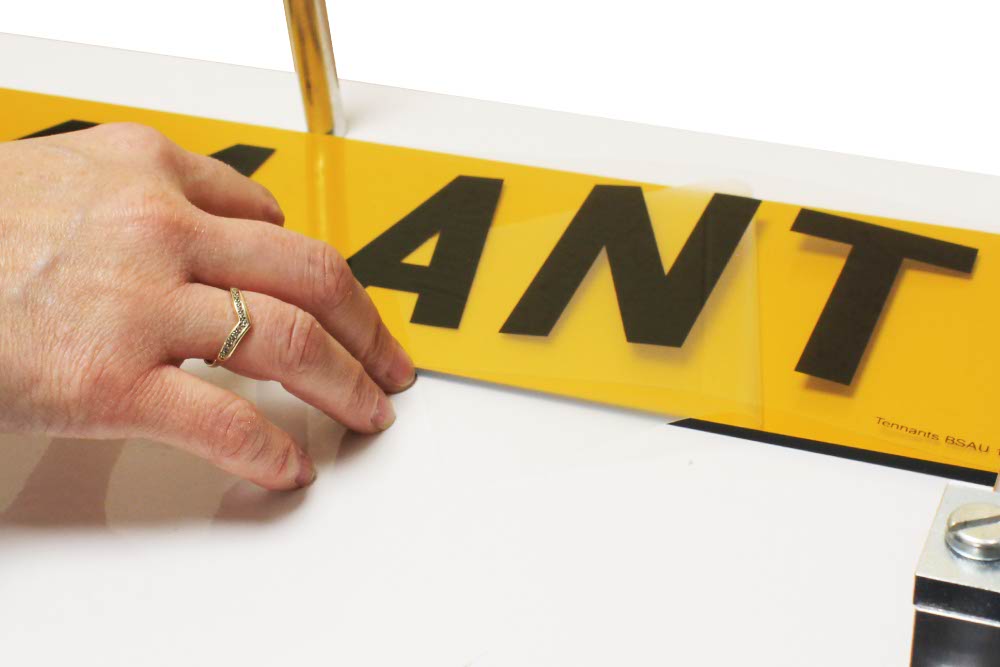
Now, move your left-hand take hold of the folded adhesive cover . Slowly wind the arm, feeding the plate through the rollers while pulling away the adhesive cover. The rollers pressure will bond the parts together, although the permanent adhesive may take a few hours to fully cure.
Enviro-Plate Specification
We specify Enviro-Plate’s or Film Number Plates are made by laminating a printed clear film sheet above a rigid LG EnviroPlate backing. Reverse printing onto the clear film, means the print is protected by being sandwiched between the components once assembled. This Film Number Plates article contains more details on our film plate components, its specification & recyclability.
We hope this Enviro-Plate Assembly guide provides a quick refresher.